
Last updated 24 November 2026
Choose for daily traffic, light and security at the back of the house
Back doors get far more practical use than front doors, yet they receive less attention when people plan home improvements. This guide covers back and side doors leading from a kitchen, utility room or hallway to the garden. Separate guides look at front door colours, front door security and composite versus uPVC front doors, so this one stays with the rear entrance.
At a glance
- Start with how the door is used
- Glass, light and privacy
- Security at the back of the house
Start with how the door is used
Think about who uses the back door and why. In many Devon homes it is the main route for children, dogs, laundry, bins and muddy boots. Some families use it more than the front door. A door that copes with heavy, frequent use, opens easily with hands full and closes reliably is more valuable here than decorative detail.
Note where the door sits in relation to worktops, a washing machine or a radiator. A door that swings into a cramped utility can be awkward every single day. Mark the route from the door to the garden and to the bins, and consider which way the door would most naturally open to suit those trips.
Glass, light and privacy
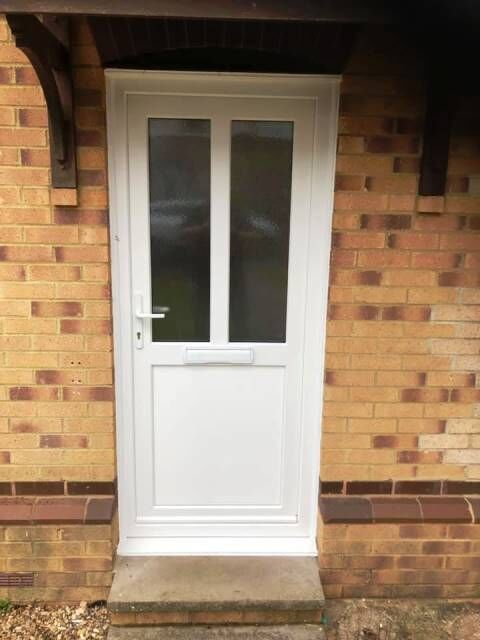
Back doors often bring valuable light into a kitchen or narrow hallway. A fully glazed or half-glazed design can brighten a room considerably, while a solid door gives more privacy. Consider what the door faces: a private garden may suit plenty of glass, while a side passage overlooked by neighbours may need obscure or decorative glass.
Glass near the lock is sometimes raised as a security concern. Laminated glass is harder to break through, and safety glazing is expected in doors under Approved Document K. The glass types guide explains the options in more detail, so you can balance light and peace of mind.
Security at the back of the house
Back and side doors are often out of sight from the street, which makes security important. Multi-point locking, a robust frame and secure hinges are worth asking about. Approved Document Q sets security expectations for doors in new homes, and its principles are a useful benchmark when choosing a replacement.
Think about the side gate and lighting too, though those sit outside the door itself. A good lock is only effective if it is used, so a door that is easy to lock with a key or thumb-turn encourages good habits. The front door security guide covers lock types in more detail and much of it applies to back doors.
Opening direction and hinge side
Most back doors open inward, but outward-opening doors are sometimes chosen where inside space is tight. An outward door needs clear space outside and should not open into a path, step or bin store. It can also be more exposed to wind catching it. Weigh the inside and outside space before choosing.
The hinge side decides which way you approach the opening. Stand at the doorway and imagine carrying a laundry basket out: does the door swing out of your way or into your path? These small decisions are much easier to get right at survey than after the door is made.
Thresholds and the step outside
Many back doors have a step down to a path or patio. A lower threshold can make trips easier, but the outside level, drainage and exposure all affect what is sensible. If the door faces driving rain or the patio slopes towards the house, water management becomes more important than a minimal threshold.
The level thresholds guide explains these trade-offs. If anyone in the household uses a wheelchair, pushchair or walking aid, mention this at survey so the threshold and door width can be considered together rather than as an afterthought.
Material and appearance
County Windows fits uPVC and composite doors. For a back door, a practical finish that is easy to wipe clean is often a priority. Consider whether you want the back door to match the windows, the front door or neither. Matching rear windows usually gives a tidy look from the garden.
Hardware colour, letterplates and handles are rarely needed in the same way as on a front door, though a letterplate on a side door is sometimes useful. Keep the specification simple where possible, and spend effort on the parts that affect everyday function: glazing, locking and the way the door opens.
Preparing for a survey
Photograph the door from inside and outside, including the step and any nearby fittings. Note the problems with your current door, such as draughts, sticking, poor light or a lock that is hard to use. List the features you want to keep, perhaps a cat flap position or a glazed panel that brightens the kitchen.
Share these notes with County Windows so the quotation reflects the way you use the door. Ask for the glass, lock type, threshold and opening direction to be stated clearly. A well-chosen back door is one you stop noticing because it simply works every day.
Sources and further reading
- GOV.UK: Approved Document Q, security in dwellings
- GOV.UK: Approved Document K, protection from falling, collision and impact
Discuss your home with County Windows
Explore our uPVC doors or request a quotation for your property. Explain your priorities and the condition of the existing openings so the survey can establish an appropriate specification.