
Last updated 24 November 2026
Choose the hardware alongside the door, not after it
Door furniture is the collective name for the visible fittings on a front door: the letterplate, knocker, numerals, spyhole, pull handle and lever handle. These small parts shape how the entrance looks and how it works every day. This guide explains the choices in plain terms so you can decide what you want before your door is ordered.
At a glance
- Why furniture is decided before ordering
- Letterplates: position and draughts
- Knockers, bells and spyholes
Why furniture is decided before ordering
Many fittings need holes or reinforcement made when the door is manufactured. A letterplate slot, for instance, is cut through the door slab, and its position affects the panel design and any glass. Moving it later is not straightforward. Deciding on furniture at the survey means everything is built into the door in the right place from the start.
Choosing together also keeps the look consistent. Handles, letterplate, knocker and numerals usually come in matching finishes, such as chrome, gold-coloured, black or satin tones. Mixing finishes can work, but most people prefer a co-ordinated set. Looking at the whole entrance at once helps you avoid a door where each fitting seems to belong to a different house.
Letterplates: position and draughts
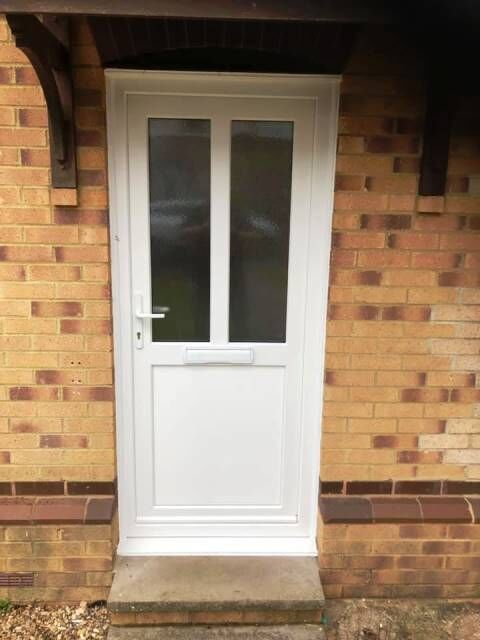
A letterplate can sit in the middle of the door, low down near the bottom rail, or be left out altogether if you use an external post box. Mid-height plates are easier for delivery staff; low plates keep the panel design clean but mean more bending. Think about who calls most often and what they bring.
Letterplates are a common route for cold air and noise. Many come with internal flaps or brush strips to reduce draughts, and some households add a letter cage inside to catch post and keep it off the floor. Our guide on how to stop door draughts covers the wider picture if your current door lets in cold air around the edges.
Knockers, bells and spyholes
A knocker is partly decorative and partly practical. Some doors combine a knocker with a spyhole in one fitting, which saves space on a narrow panel. If you already have a video doorbell or wired bell, check where it will sit relative to the new frame so the push button remains easy to find.
A spyhole lets you check who is outside before you open the door, which many people value, especially when living alone. On a door with glazed panels you may already see enough, but obscured glass can make that harder. Consider the height of the spyhole too, so it suits the people who will actually use it.
House numerals and names
Clear numbering helps visitors, couriers and emergency services find you. Numerals can be fixed to the door, to a glazed panel as a transfer, to a side panel or onto the wall beside the entrance. Choose a size and contrast that reads well from the pavement, especially if the door is set back from the road.
If your house has a name rather than a number, a plaque beside the door may suit better than lettering on the door itself. Whichever you choose, think about lighting at night: a number that looks crisp in daylight can disappear in the dark if it sits in the shadow of a porch or canopy.
Handles: lever, pull and security
Front doors usually have a lever handle inside and either a matching lever or a fixed pull handle outside. A lever on both sides allows the door to be opened from outside without a key when unlocked, whereas a pull handle means you always use the key to retract the latch. Each suits different households.
Handles also connect to the multipoint lock and cylinder, which is where security really lies. Ask what cylinder is fitted and what security standard it meets, and check whether your home insurance has requirements. The front door security guide explains locks in more depth, so this decision can focus on comfort, grip and appearance.
Finishes for coastal and exposed homes
Hardware on a front door is handled constantly and faces the weather all year. Homes close to the sea, common around Torbay and the South Devon coast, see salt in the air that can dull some finishes faster than others. Ask which finishes are expected to keep their look in an exposed position before choosing.
Simple care helps any finish last. Wiping hardware with a soft damp cloth and avoiding abrasive cleaners keeps surfaces looking fresh. The coastal homes guide offers more general advice about windows and doors near the sea, and the care guide covers routine cleaning of frames and fittings.
Bringing it together at survey
Before the survey, collect a few photographs of doors you like, noting the furniture as well as the colour and glass. Think about where post arrives, whether you need a spyhole, and how you prefer to open the door. These simple points let the surveyor suggest arrangements that suit the way your household works.
County Windows fits composite and uPVC front doors across Torbay and South Devon. The composite doors page shows styles, and the front door colour guide can help with the bigger decisions. When you are ready, request a free quote and mention the furniture you have in mind so it can be included properly.
Sources and further reading
Discuss your home with County Windows
Explore our composite front doors or request a quotation for your property. Explain your priorities and the condition of the existing openings so the survey can establish an appropriate specification.