
Last updated 27 November 2026
Decide room by room, not window by window
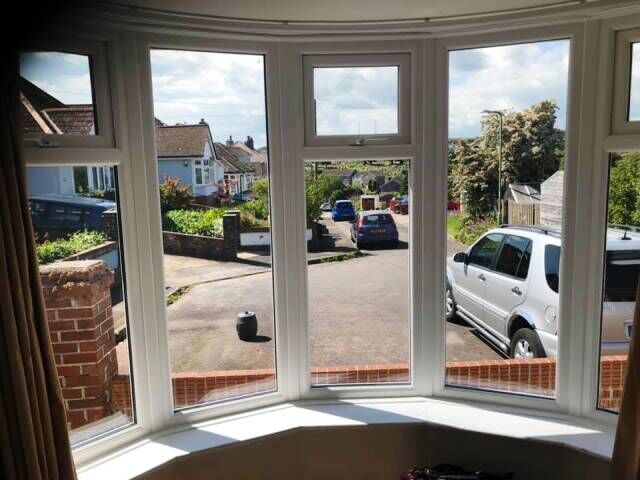
Most replacement windows combine fixed panes with one or more opening sashes. Getting that mix right affects how fresh the room feels, how easy the glass is to clean, whether a bedroom offers a way out in a fire and how the window looks from the street. This guide sets out the trade-offs so you can go into a survey with a clear idea of what each room needs.
At a glance
- What a fixed pane offers
- Why every room still needs some opening glass
- Thinking about cleaning
What a fixed pane offers
A fixed pane, sometimes called a fixed light, is glass held directly in the outer frame with no sash around it. Because there is no extra frame section, it gives a slightly larger area of glass and slimmer sightlines than an opening sash of the same size. That can make a real difference to a view across a garden or towards the coast.
Fixed panes also have fewer moving parts and no opening joint, so there is nothing to adjust and no gasket on a sash to wear over time. They suit tall glazed screens, the middle section of a wide window and spots where nobody would ever open the glass, such as a high landing panel or a narrow light beside a door.
Why every room still needs some opening glass
Rooms need fresh air. Trickle vents provide background ventilation, but an opening sash lets you clear cooking smells, steam and stuffiness quickly. Kitchens, bathrooms and bedrooms in particular benefit from a generous opening section, and the building regulations on ventilation expect habitable rooms to have a means of rapid ventilation as well as background airflow.
Bedrooms and some other rooms may also need an escape window, depending on the layout of the house. Our fire escape windows guide explains when that applies and what size of opening is involved. Replacing a window that currently offers an escape route with one that is fully fixed is not something to do without checking the requirements first.
Thinking about cleaning
The outside of a fixed pane can only be cleaned from outside. On the ground floor that is rarely a problem, but on upper storeys it means a ladder or a window cleaner. An opening sash with easy-clean hinges swings out far enough to reach the outer face from inside the room, which many people value on first-floor windows.
A practical approach is to place opening sashes where they let you reach neighbouring fixed panes as well. A wide bedroom window with a fixed centre and opening sashes at each end, for example, can often be cleaned entirely from indoors. Mention cleaning at the survey, because it affects which way the sashes hinge as well as where they sit.
Security and safety considerations
Fixed panes cannot be opened from outside, which makes them a sensible choice beside a door or on an easily reached ground-floor elevation. The glass itself should still be suitable for its position: glazing low down or next to a door may need to be toughened or laminated under the building regulations on safety glazing.
Opening sashes on upper floors bring their own question, particularly in homes with young children. Restrictors can limit how far a sash opens while still allowing air in, and they can usually be released for cleaning or escape. Our child safety and windows guide explains those options in more detail if this is a concern in your home.
Keeping the appearance balanced
A window that mixes fixed and opening sections can look uneven if the frame widths differ noticeably. Some designs use a dummy sash, a fixed pane framed to match the opening ones, so that every section shows the same frame width from outside. That small detail helps the elevation look tidy, especially where several windows sit side by side.
Keep an eye on symmetry across the front of the house. If one bay has opening sashes on the left and another has them on the right, the difference will be visible from the road. Sketching the elevation, or photographing it and marking where you would like opening sections, is a simple way to check the overall look before anything is ordered.
Matching existing windows elsewhere
If only some windows are being replaced now, look at how the existing ones divide their glass. A new window with a very different arrangement of fixed and opening panes can stand out against older neighbours on the same elevation, even when the frame colour matches perfectly.
Bring a photograph of each elevation to the survey and point out any windows that will stay for now. That lets the new layout echo the old where it matters, and avoids a front that looks patched together once every window has eventually been changed.
A simple room-by-room approach
Start with what each room is used for. Bedrooms need ventilation and may need escape. Kitchens and bathrooms need fast airing. Living rooms often benefit from a large fixed area for the view with a modest opening section for summer. Landings and stairwells may be best fixed or fitted with a small top-hung vent that is easy to reach.
Write those needs down and bring them to the survey. Our guide to window opening styles and handing explains casement, tilt and turn and other options that can be combined with fixed panes. County Windows supplies and fits uPVC windows across South Devon, and you can request a free quote to talk through the layout for each room.
Sources and further reading
Discuss your home with County Windows
Explore our uPVC windows or request a quotation for your property. Explain your priorities and the condition of the existing openings so the survey can establish an appropriate specification.