
Last updated 27 November 2026
Front windows often carry bays, bars or larger panes, which affects the quote
The windows on the front of a house do more than let in light. They shape how the property looks from the road, they face passing traffic and people, and they are often the largest or most detailed windows in the home. This guide looks at the questions that come up specifically when you replace front-facing windows, whether you change them on their own or with the rest.
At a glance
- Why the front deserves extra thought
- Fitting in with the street
- Bays and larger front windows
Why the front deserves extra thought
The front elevation is what visitors, neighbours and potential buyers see first. Window proportions, frame thickness, colour and the way the glass is divided all change the character of a house. A window that looks perfectly fine at the back can look out of place on the front if its style clashes with the door, the brickwork or the houses either side.
That does not mean you must copy what was there. It means choosing deliberately. Take a photo of the front from across the road and look at it as a whole. Notice the lines of the existing windows, whether they line up with each other and the door, and what you would like to change before you start looking at brochures.
Fitting in with the street
On a terrace or a row of similar houses, the windows tend to follow a shared pattern. Keeping a similar layout and colour helps your home sit comfortably in the street, while a dramatically different style can stand out for the wrong reasons. On a detached house you usually have more freedom, but the same principle of proportion still applies.
Most like-for-like replacements are permitted development, but conservation areas, listed buildings and some estates with special conditions are different. If you are not sure, check with your local planning authority before ordering. The Planning Portal gives general guidance, and our guide to planning permission for replacement windows covers the questions to ask.
Bays and larger front windows
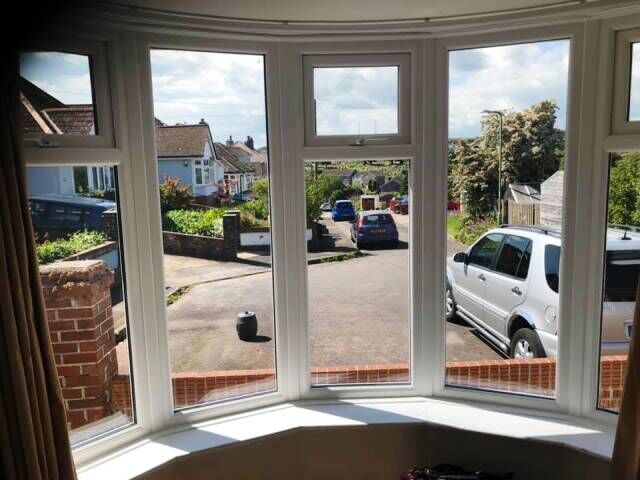
Many front rooms have a bay or bow window, and these need more care than a flat window. Each bay is made of several frames joined at angles, and the joints and the roof above must be supported properly. A survey checks whether the existing bay structure carries its own weight or relies on the old frames for support.
Large picture windows on the front also need careful glass choices. Bigger panes may need toughened glass depending on size and height, and the frame needs to suit the weight. Our guide to bay window replacement goes into the structural side, which is the part most likely to change the cost of the front of the house.
Privacy, noise and security
Front windows face the pavement, so privacy matters more here than anywhere. Obscure glass in the lower part of a window, or a layout with a separate top opener, can help. If you live on a busy road, acoustic glass with panes of different thickness can make a noticeable difference to traffic noise in the front rooms.
Ground-floor front windows are also the ones an opportunist is most likely to try. Look for multi-point locking, key-locking handles and internally beaded glass that cannot be removed from outside. Laminated glass adds another layer of protection. Our guide to window security and locks explains the hardware to ask for when comparing quotes.
Keeping front and back consistent
Some households replace the front windows first and the rest later, often to improve the look of the house or the rooms that face the road. That works well as long as you record the exact frame profile, colour and hardware so later windows can match. Profiles and colours change over time, so keep the paperwork safe.
If budget allows, doing the whole house together gives the most consistent finish and usually means fewer visits. Either way, decide on the style for the whole property first, then choose which windows go in when. Our guide to replacing windows in stages covers how to plan a phased project without ending up with a mismatched mix.
Planning your front window replacement
Start with what you want to improve: looks, warmth, noise, security or all of these. Then choose a frame style and colour that suits the house and the street, decide how each window should open, and think about glass for privacy and noise. Bring photos of styles you like to the survey.
At the survey, the windows are measured and the openings checked, especially any bays. You then get a written quote describing each window, its glass and its hardware. County Windows supplies and fits uPVC and aluminium windows in casement, sash and tilt-and-turn styles, and a free quote is the easiest way to see what suits the front of your home.
Sources and further reading
Discuss your home with County Windows
Explore our uPVC windows or request a quotation for your property. Explain your priorities and the condition of the existing openings so the survey can establish an appropriate specification.